Slow travel is a passion of mine. Spending longer in one place allows for deeper connection with the local culture. But on a recent journey with UTracks, I experienced another “slow” — the “slow food movement” of Piedmont.
This eight-day walking tour was a veritable foodie and oenologist’s paradise. Starting in Alba, with overnights in Vergne, Monforte d’Alba, Cissone, Cravanzana, and finishing in Cortemilia, I passed through the land of truffles, vineyards, and hazelnut forests. Tucked into the northwest corner of Italy, Piedmont borders Switzerland to the north and France to the west.
The first day I arrived in Alba, I discovered wine references galore, beginning with the Hotel Calissano where I stayed. It’s named after Luigi Calissano, who founded a nearby winery in 1872, and who led the way in spreading the reputation of the area’s viticulture.
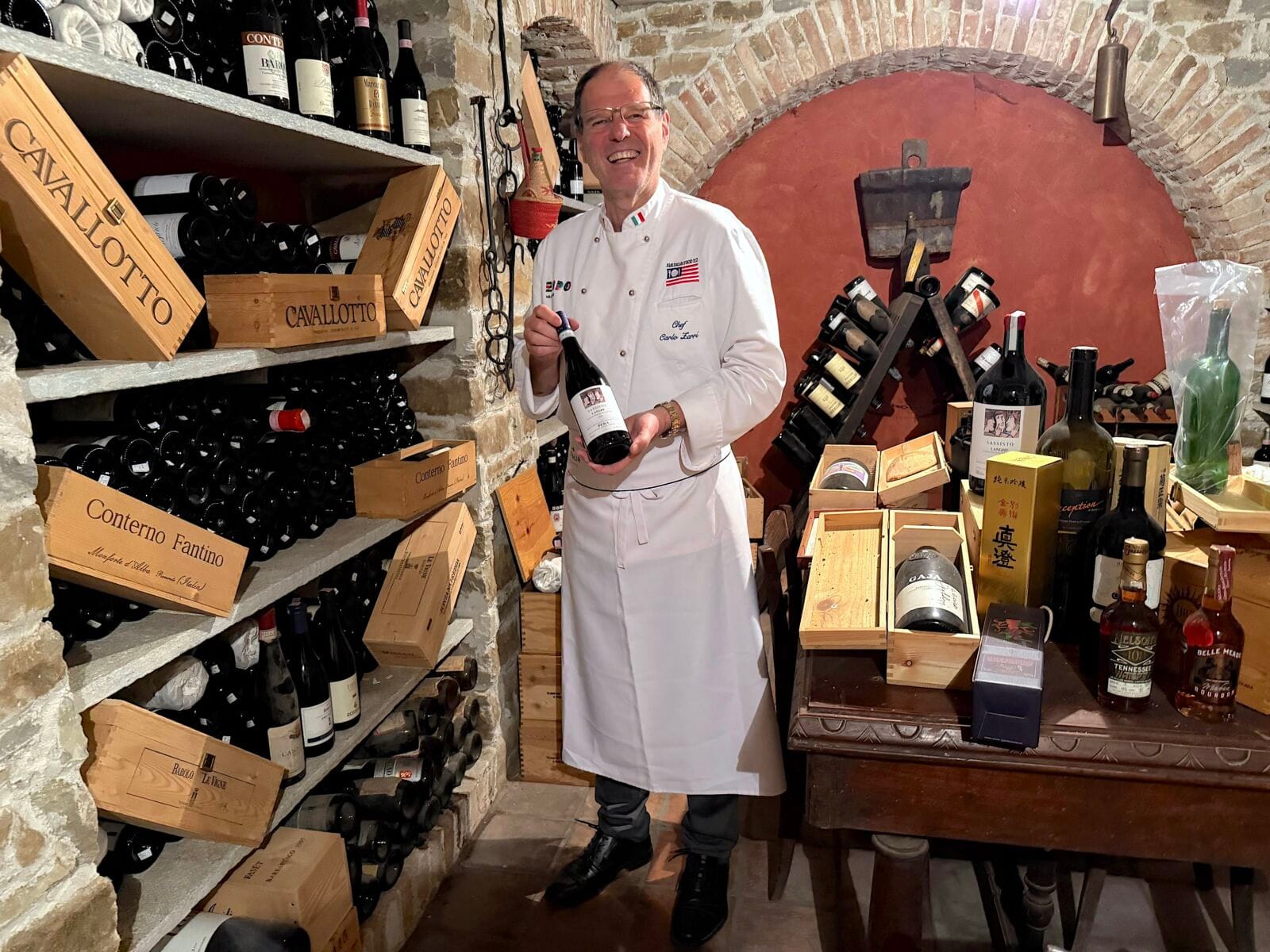
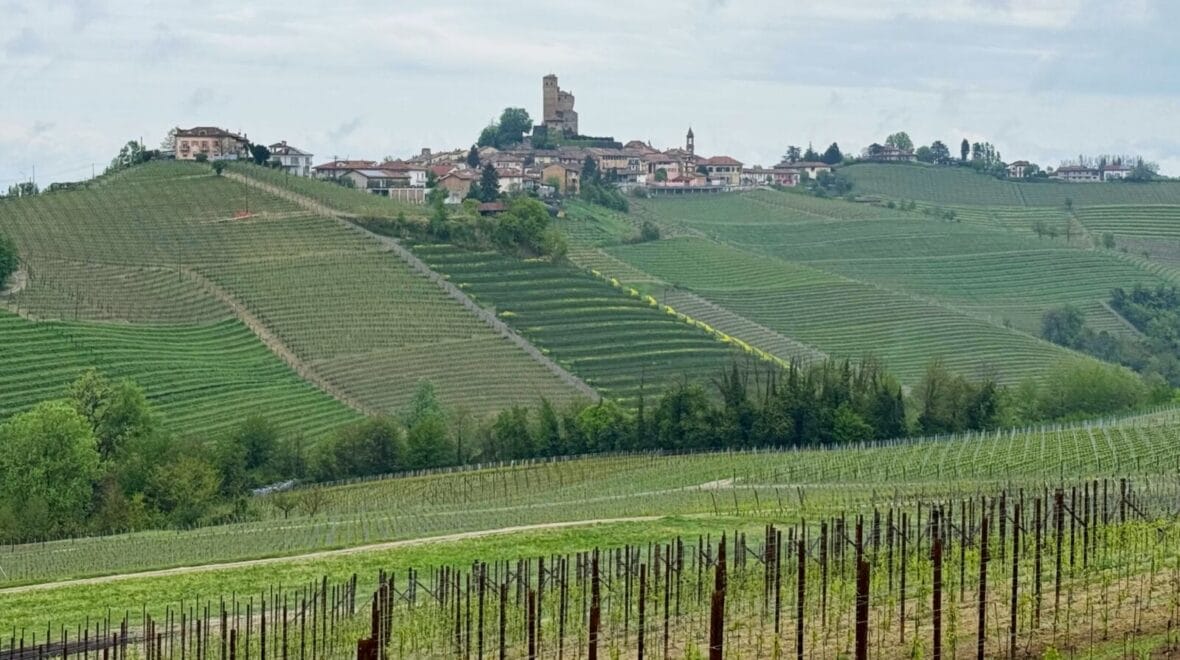
A bottle of Nebbiolo from chef Carlo Zarri’s wine cellar in Cortemilia is a treasure. At top, vineyards and the village of Roddino on a hilltop, a view that is quintessential Piedmont. (Kate Robertson photos for VacayNetwork.com)
That was apt foreshadowing, as my first three days of walking (Alba to Vergne to Monforte d’Alba to Cissone) took me through historical villages and spring-blossoming vineyards. There are plenty of wineries with tasting rooms en route (best to research and book ahead, although some towns, like Barolo, welcome walk-ins), and most restaurants have large displays of wine and extensive cellars. UTracks lists interesting wineries/tasting rooms in the provided itinerary.
Exquisite Wine Tours in Italy
The vineyard landscape of Piedmont was declared a UNESCO World Heritage site in 2014 for its unique manmade territory blended with nature. It is particularly known for its prestigious red wines, particularly Barolo and Barbaresco, both made from nebbiolo, a grape dating to the 13th century, known for its high tannins and complex aromas..
Situated in a fertile basin between the Alps and Alpennine mountains, the hill country in this region has soil with a high composition of clay and other minerals, which add to the terroir of the wines and food. A continental winter climate and an abundance of fog (“nebbiolo” comes from the word nebbia, which means “fog” in Italian) also aid in the terroir expression and influence the ripening of the grape.
MORE ITALIAN WINE: Brunello Beckons
Italians are passionate about their wines and love to educate and recommend. I learned that Nebbiolo wines, full-bodied and tannic, but light and drinkable with less aging, are a good choice for the budget-conscious.
I splurged a couple of times on a Barbaresco or Barolo, both which carry DOCG (Donominazione de Origine Controllate e Garantitia) label, Italy’s highest classification of wine and strictly regulated, including the location and altitude at which the grapes are grown. My favorite? The smoother, softer Barbaresco.
I’m fortunate that my first day of walking was good weather, as I learned how to use the UTracks app to navigate the route and indicators to watch for, before the rain started the next day. The rain was light and misty and resulted in a beautiful low fog (the kind the grapes love). I was quickly soaked except, amazingly, my trail runners. My shoes, however, didn’t escape the main problem–gumbo clay (great terroir for grapes, not so good for walking) on the unpaved paths through the vineyards. It’s slick, and I quickly had one-inch platforms on the bottom of my trail shoes.
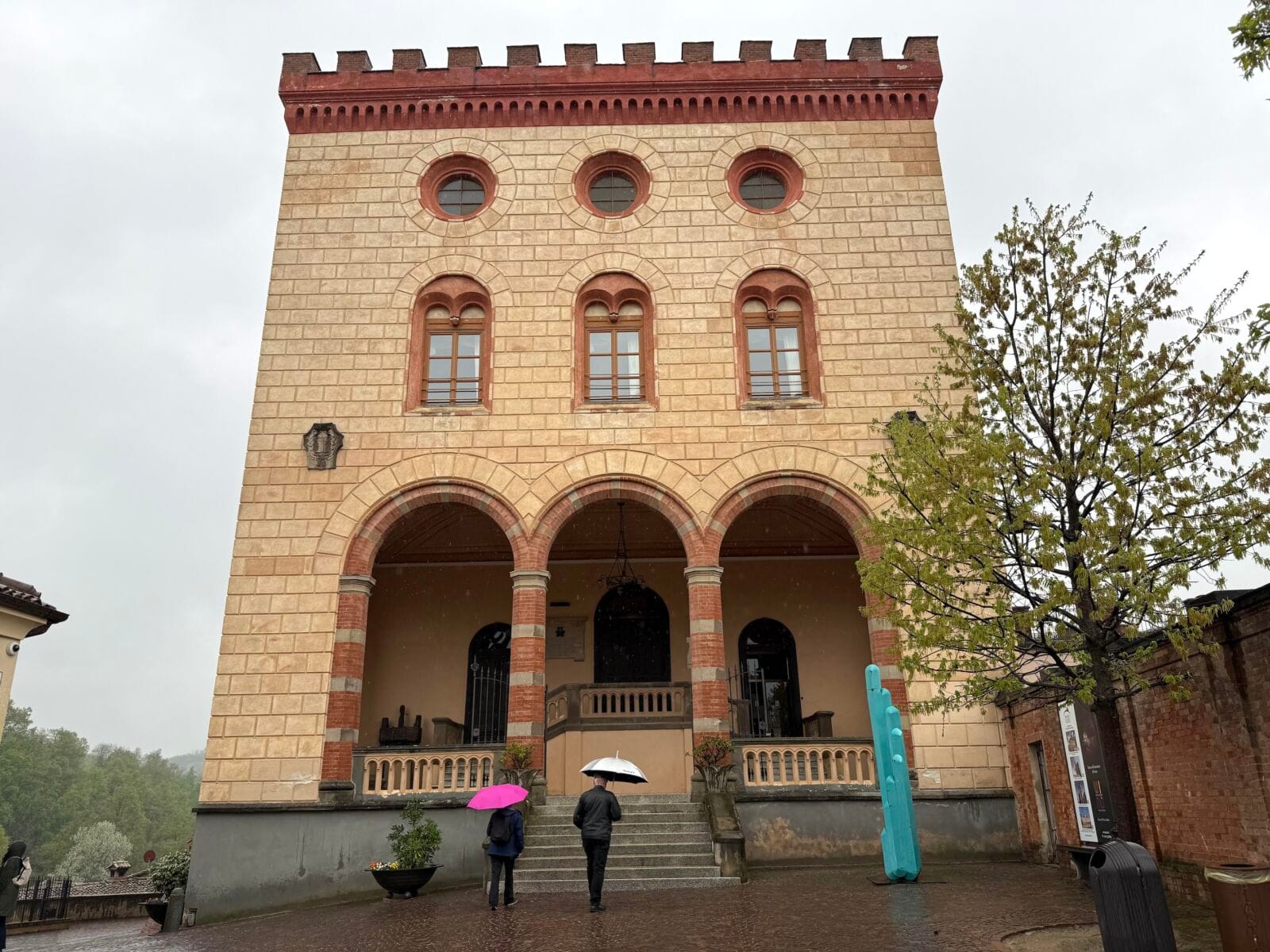
Barolo Castle, home to WiMu, features four floors of historical displays that tell the story of Piedmont’s viticulture and terroir. (Kate Robertson photo for VacayNetwork.com)
By lunch I reached the Wine Museum (WiMu) in Barolo, and I spent two wonderful hours out of the rain. The Barolo Castle it’s located in has a 1,000-year history, initially built as a defensive fortress, and subsequently used as a residence, then a college, before becoming a museum. Today, WiMu is a mix of educational and interactive displays about wine, spread over four floors of the castle.
The first floor of WiMu is dedicated to the Fallettis, the last marquises of Barolo. They also played a role in the history of wine in the region because Marquise Juliette Barolo, originally from a French noble family in Bordeaux, hired a French oenologist who started the aging of the wine in wooden casks. This transformed the typically sweet wine of the region to the dry, complex wines of today.
As I left the museum it was raining even harder and I decided to stick to paved roads (easy to find on Google maps). On the entire route there were patches of natural oak forests, the ideal microclimate for truffles.
Exploring the Truffles of Piedmont
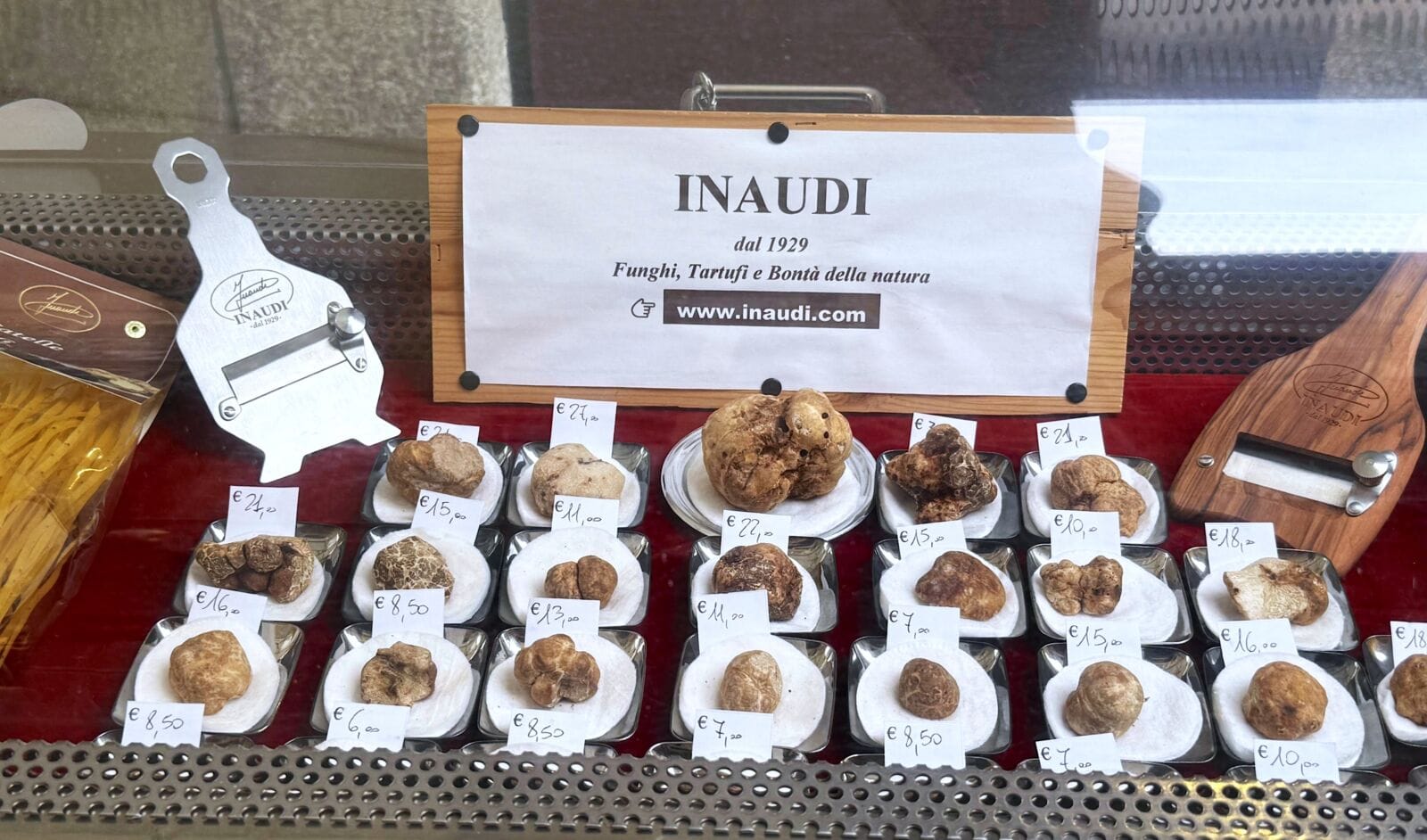
Foodies, feast your eyes. This store in Alba features a decadent amount of truffles for sale. (Kate Robertson photo for VacayNetwork.com)
Abundant black and white truffles also put Piedmont on the culinary tourism map. The famous white Alba truffle is one of the most expensive foods on the planet, fetching up to $3,000 per 100 grams at market.
Because black truffles are harvested in the summer and winter, and white truffles in the fall, I missed the high season. Although there were still a few menu items (like pastas) that had truffles shaved on top, some restaurants advised they were out of truffles. Italians tend to eat and follow seasonal menus. Accordingly, if you’re a truffle lover, you may want to book this walking tour in the fall when the coveted white truffles are harvested and plentiful.
For most of the month of November, Alba has a White Truffle Fair, featuring markets, tastings and events. You can also take truffle tours with a “trifolau” and his dog to search for truffles. It is illegal to pick truffles on your own.
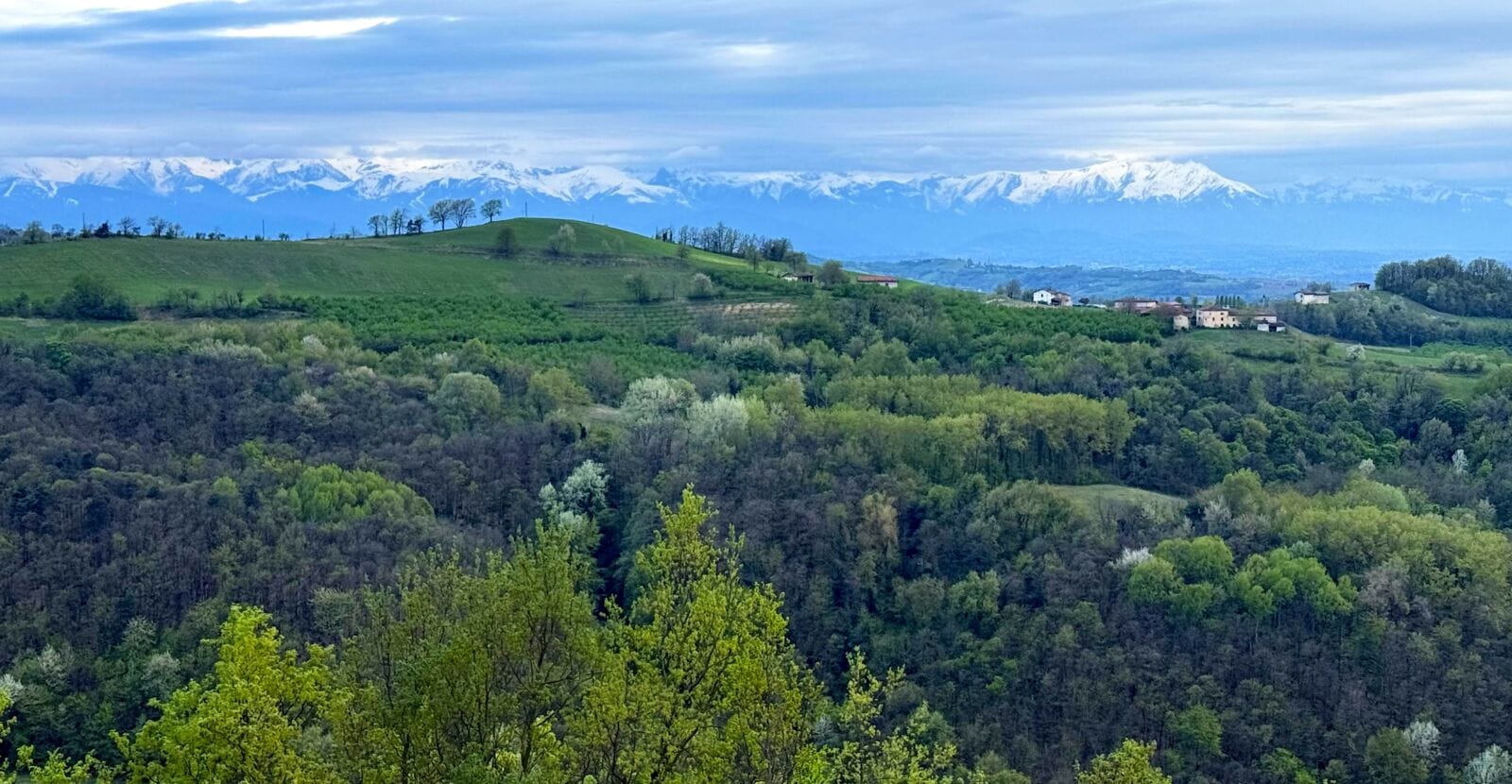
Piedmont’s location in northern Italy gifts visitors with views such as this one: A sweeping panorama of the Alps from Balcone Sulle Langhe. (Kate Robertson photo for VacayNetwork.com)
In Cissone, I spent two luxurious nights at Balcone Sulle Langhe countryhouse, where the weather was clear enough that I finally saw the Alps in the distance. At dinner, I asked the owner for a wine recommendation to accompany my pumpkin tortellini with blue cheese sauce. The Barbera Mucci 2022 he recommended had vibrant fruity notes and soft tannins and is another of my favorites. He nods in the direction of Roddino, which I’d walked through earlier that day, and tells me the Barbera grapes are grown and crafted there.
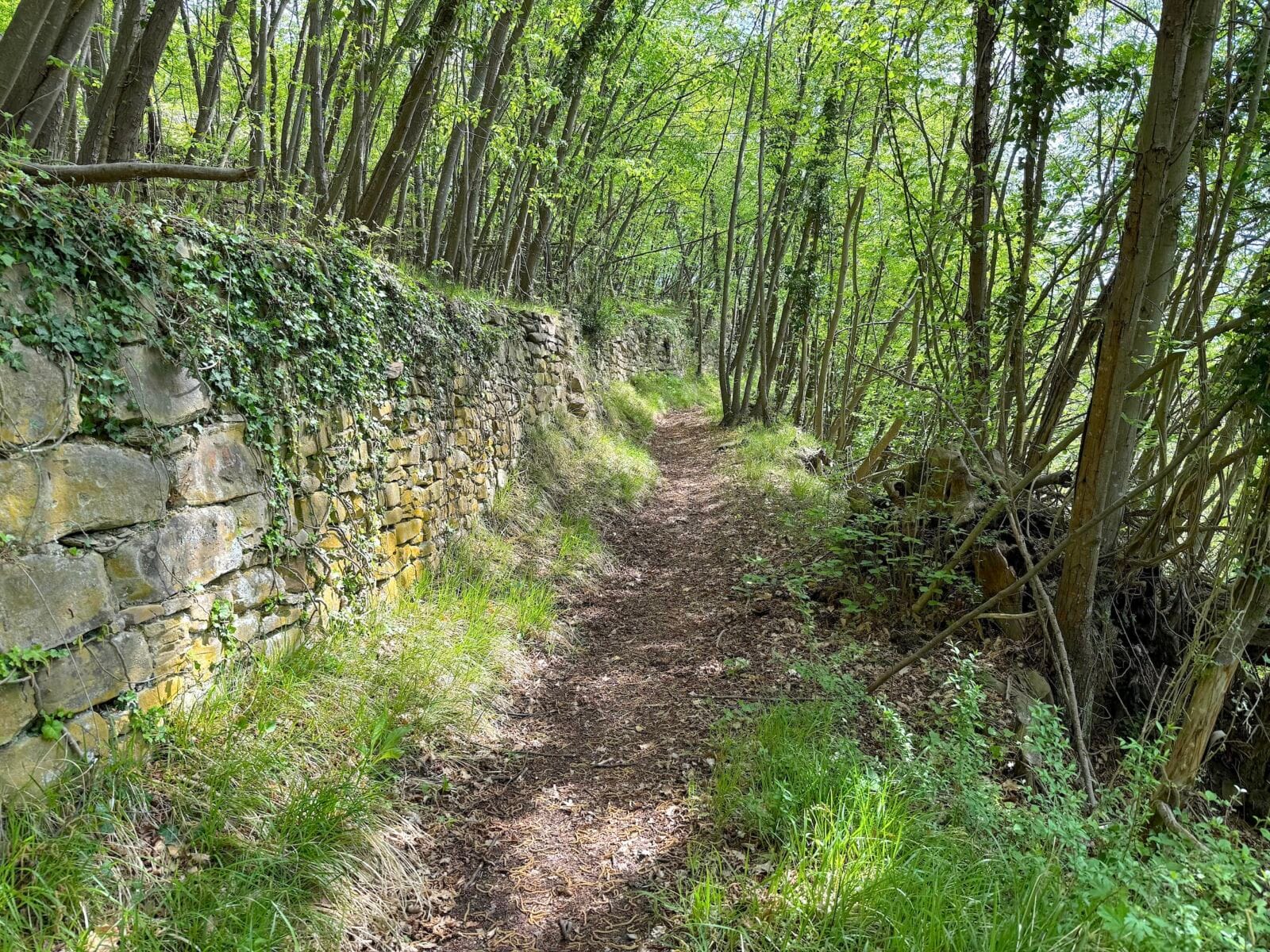
Oak forests in the vicinity of Cortemilia are home to famed truffles and sublime Piedmont scenery. (Kate Robertson photo for VacayNetwork.com)
Around the village of Cissone the ecosystem is changing, more natural forest and less cultivated vineyards than on the other side of the hills where I was earlier in the week. The countryside is less populated and the terrain steeper, not as suitable for vineyards. It does offer my preferred kind of hiking — along country lanes and little gravel pathways through oak forests (watch for ticks) and hazelnut groves.
Walking the Mystical Hazelnut Forests
Like grapes, hazelnuts are harvested in autumn. After they ripen and fall they are harvested with a vacuum sweeper, which explains why the ground under the trees looks so clean. The local variety is nocciola del Piemonte, a delicate hazelnut known for its sweetness and high oil content.
Almost every hotel and restaurant sells hazelnut and gianduja (a high-end Nutella spread) and dessert menu items often include hazelnut cakes and gelatos. The hazelnut museum in Cravanzana (Cuor di Nocciola delle Langhe) is worth a visit. A family-owned business that established hazelnut orchards in 1920, today it crafts organic products like pastes and spreads that you can taste and buy in the product room.
Experience Culinary Heaven in Italy
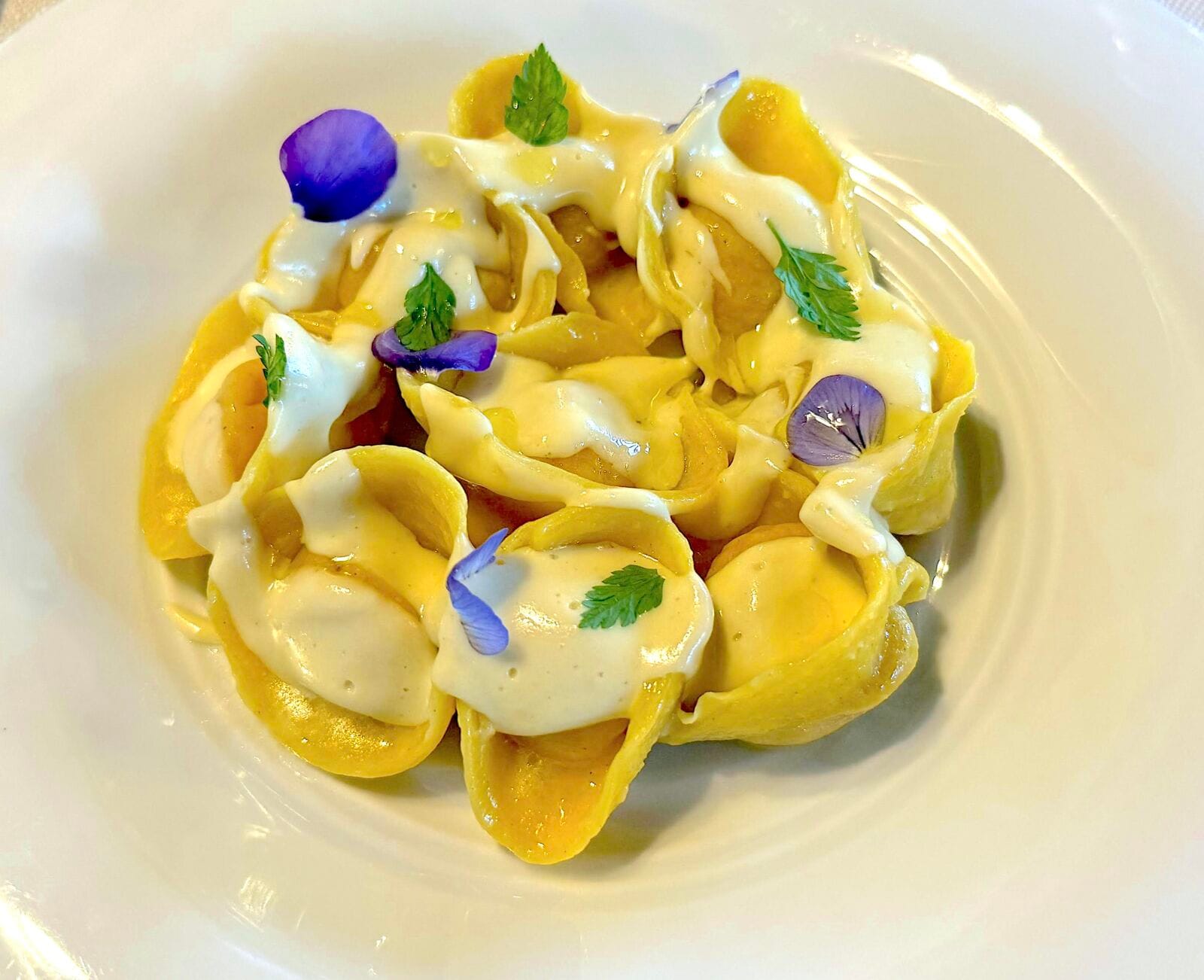
Pumpkin tortellini with blue cheese sauce at Balcone Sulle Langhe. (Kate Robertson photo for VacayNetwork.com)
Ahhhh, the mouthwatering food of Piedmont! Alba is a UNESCO City of Gastronomy, committed to preserving and promoting its culinary heritage. The Alba region has an amazing 15 Michelin-starred restaurants. If you’re used to the lighter Mediterranean cooking style of south Italy, you might be surprised at the meat and cheese-heavy cooking in these northern Alpine valleys.
More local products in Piedmont have been granted “protected” status than in any other region of Italy. These protections guarantee that the foods are produced and packed in a specific geographical area using traditional methods — products like nociolla del Piemonte hazelnuts, Castelmagno cheese, Cuneo prosciutto crudo (dry-cured raw ham), and many more.
Bra, just 9 miles (15 kilometres) from Alba, is the home of the Slow Food Movement. It was started in 1986 as a protest against the invading fast-food culture and grew into a global movement that celebrates local ingredients and traditional recipes. Bra also has the first university of gastronomic sciences in the world.
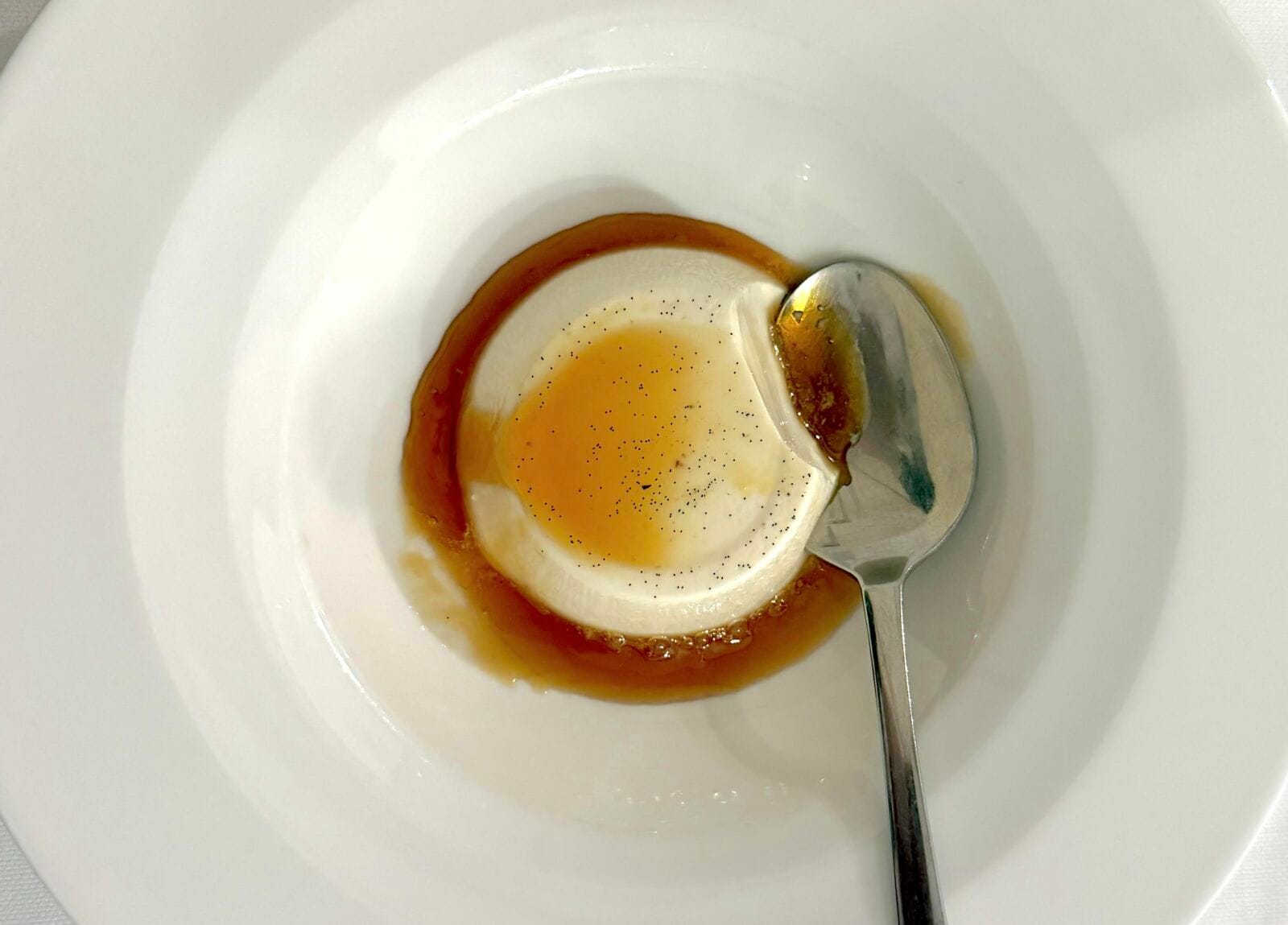
Silky smooth panna cotta is a highlight dish at Buon Padre in Piedmont. (Kate Robertson photo for VacayNetwork.com)
Restaurants and bars abound where you can, or more aptly, where you will, taste the movement in action. Even though this tour led me through very small villages, all of the restaurants I visited had gourmet seasonal menus, regional wines, and dishes rooted in the land around them.
For example, at Buon Padre, the only restaurant in Vergne (a village of 100 residents), traditional Piedmont food has been served since 1923. In the homey atmosphere (it was like eating in your grandma’s dining room, with family photos on the walls and lace curtains on the windows), I savored a chicken cacciatore with seasonal vegetables while sipping a glass of 2024 Viberti Langhe Nebbiolo from the Buon Padre’s own vineyard.
Most restaurants offer a la carte menus, with choices from the antipasti (appetizer, carne cruda, raw Fassona beef from the Piedmontese hills was a common one I saw), primi (first course, things like pasta or risotto: a must-try is the famous hand-rolled egg-yolk-rich tajarin pasta that Piedmont is famous for) and secondi (usually meat/protein dishes), and dolce (desserts), of course.
Sometimes there are also menu fisso, set menu offerings with three to five courses, starting at about 40 euros (about $47 USD) — make sure you’re hungry when you tackle these menus. I saved one such experience for my final night of the tour when I stayed at Ristorante Villa San Carlo in Cortemilia.
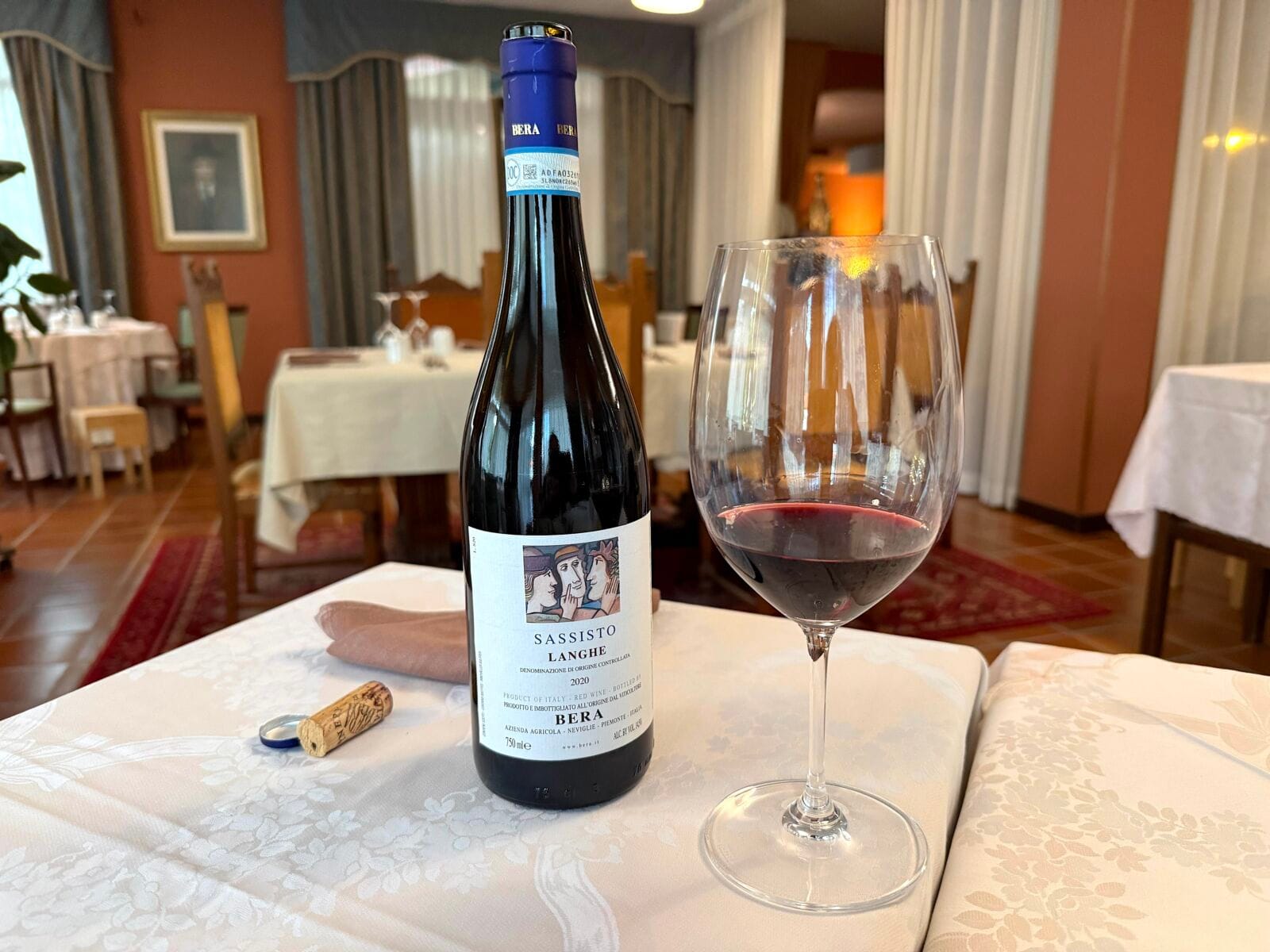
Nebbiolo from chef Carlo Zarri’s wine cellar is enjoyed at the table in his restaurant, Villa San Carlo, in Cortemilia. The vintner is the cousin of Zarri’s wife. (Kate Robertson photo for VacayNetwork.com)
The property only offers a menu fisso (be sure to reserve ahead), curated and cooked by a chef whose family has been in the restaurant business for four generations. “I start from my grandmother’s and father’s recipes,” chef Carlo Zarri says, “and I like to give a personal touch and interpretation to the traditional recipes.”
“Living in such a prosperous countryside”, he continues, “it is easy to be inspired by local ingredients such as hazelnuts, cheese, meat, and vegetables. Every season offers me a lot of ingredients to choose from.”
Don’t let Zarri’s humbleness — or this small-village vibe — fool you. He is a world-class caliber chef, having cooked for the likes of Sophia Loren and Michelle Obama. His wine cellar is also award-winning, housing at least 9,000 bottles and specializing in Piemontese wines, along with international offerings. The wine list is 56 pages long.
Zarri tells me that he’s had ample career opportunities to move to larger centers like Milan, but he always declines. As he walks me through the lush, peaceful restaurant garden at the back of the hotel, he makes it clear he’s not only committed to the slow-food movement, but also to the slower-paced lifestyle in his hometown of 2,100 inhabitants. I understand why.
More About How to Slow Travel the Piedmont Region
Tours: Book a walking tour with a company like UTracks so that you don’t have to worry about arranging accommodation or luggage transfer. You are provided with thoughtful trip notes and a GPS map on your cellphone, so you can see where you are in real time. Note: there are many trails and roads in this region, so regularly pay attention to where you are on the map. My first day of walking I added 25 minutes to my trip because I was lax and not paying attention. Subsequently, I had to climb an extra (large) hill to get back on route.
Dining in Piedmont: All of the hotels/country houses on the UTracks tour include a hearty breakfast. A lot of the villages are small and sleepy with nothing open (at least in the spring season when I visited), so you should plan ahead for lunch. Get to a grocery store in the bigger towns and buy a few days of snacks/fruit, or research lunch restaurants in advance. Keep in mind that most shops/restaurants close for two hours through the lunch hour. For dinners, often there’s only one restaurant in the village (like at Vergne and Cissone), so it is important to reserve when you check-in so there is a table for you.
Getting There: The nearest international airport is in Turin, Piedmont’s capital, and train service from Turin to Alba at the start of the tour is easy. You can pre-book your train tickets with Rail Europe. Of note: There is no bus back to Alba from Cortemilia (the final village) on Sundays, so you would have to arrange a private transfer with UTracks if that’s your final day.
Language Tip: Although, like any country, Italians appreciate when you speak a few words of their mother tongue, the hotels and restaurants were easy to navigate, often providing English menus, and waiters and hotel staff were mostly proficient in English.
Foreign Currency: The exchange rate is approximately $1 USD = 0.88 euro and $1 CAD = 0.62 euro.