The mud along the Peninsula of São Lourenço is so thick it cakes my new hiking boots, making every step a challenge. Normally, such a situation might irk me. But I savor every mucky moment on this trail — one of the most popular on Madeira — because it has brought me face-to-face with sweeping views of the volcanic coastal vistas that are nothing short of breathtaking.
This hike was my grand finale after a week of trekking with 57Hours, an adventure tour company. On the rugged Portuguese island of approximately 257,000 residents, hikers from across the globe can be found. Like me, they arrive to experience hiking trails that are unquestionably among the most beautiful on earth.
A sub-tropical island off the coast of Morocco, Madeira is a small archipelago of four islands — Madeira, Porto Santo, Desertas, and Selvagens. Located along the Atlantic Ocean, the island is dubbed both the Pearl of the Atlantic and the far-flung Hawaii of Europe, because it shares many of the same attributes, including crystal-blue waters interspersed with verdant hills and volcanic zones.

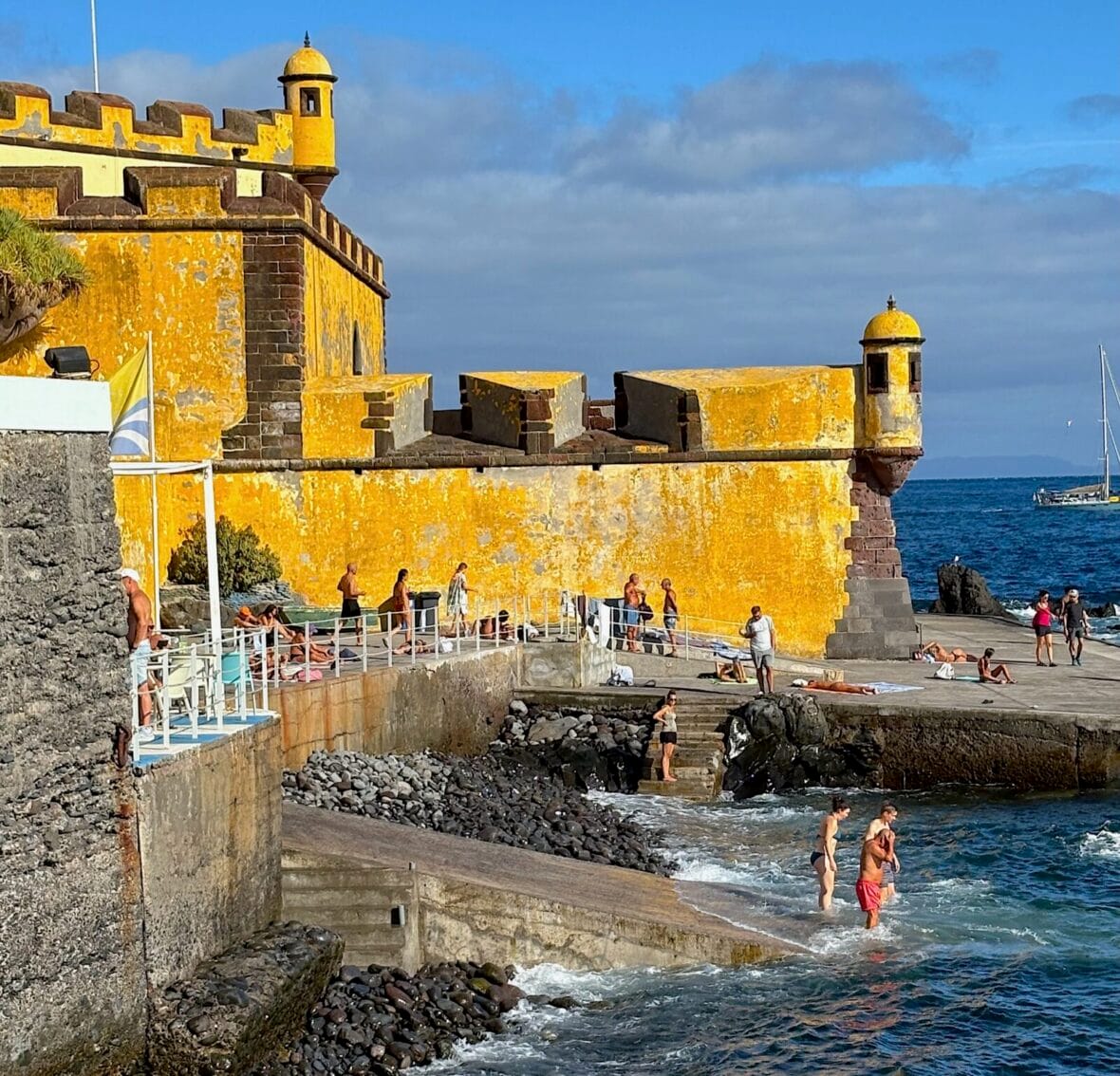
The basalt cliffs along the Peninsula of São Lourenco on Madeira provide glorious views for hikers. At top, the Fortress of Santiago in the town of Funchal dates to 1614 and its beach is an eternal favourite watering hole for locals and travelers. (Michelle Hopkins photos for VacayNetwork.com)
Every day brought a new adventure. An island native and seasoned guide, Andreia Spinola shared her deep knowledge of Madeira, including its pride and joy: The multiple award-winning wine portfolio and local cuisine, which is strongly influenced by the destination’s European and African heritage. To my delight, Spinola often recruited her husband to prepare authentic local cuisine for us to enjoy during our lunch breaks.
Hiking in Madeira is quite a sensory experience, essentially because of the island’s landscapes. Many hikes follow traditional-style villages, steep cliffs overlooking the brilliant blue waters, dense forests, and a network of about 250 trails that follow ingenious man-made canals called levadas. Dating to the 16th century, the iconic levadas were originally engineered by settlers to provide irrigation to the farmers, Spinola explained. Today, the levadas are still used for irrigation, but they also supply hydroelectric power and drinking water.
One day, I walked through long, dark, craggy tunnels to avoid hitting my head on rock with only my toque’s headlight guiding the way; while the next, I followed a very narrow path with a zig-zag descent back to the sea. Or, I climbed vertical steps past grazing cattle and thundering waterfalls as I looked down precipitous tree-strewn valleys hundreds of meters below. On day five, along with nine other hikers, I journeyed to the Paul da Serra plateau, where we set off for a hike in the heart of Fanal Forest, a UNESCO World Heritage Site, famous for its twisted laurel trees.
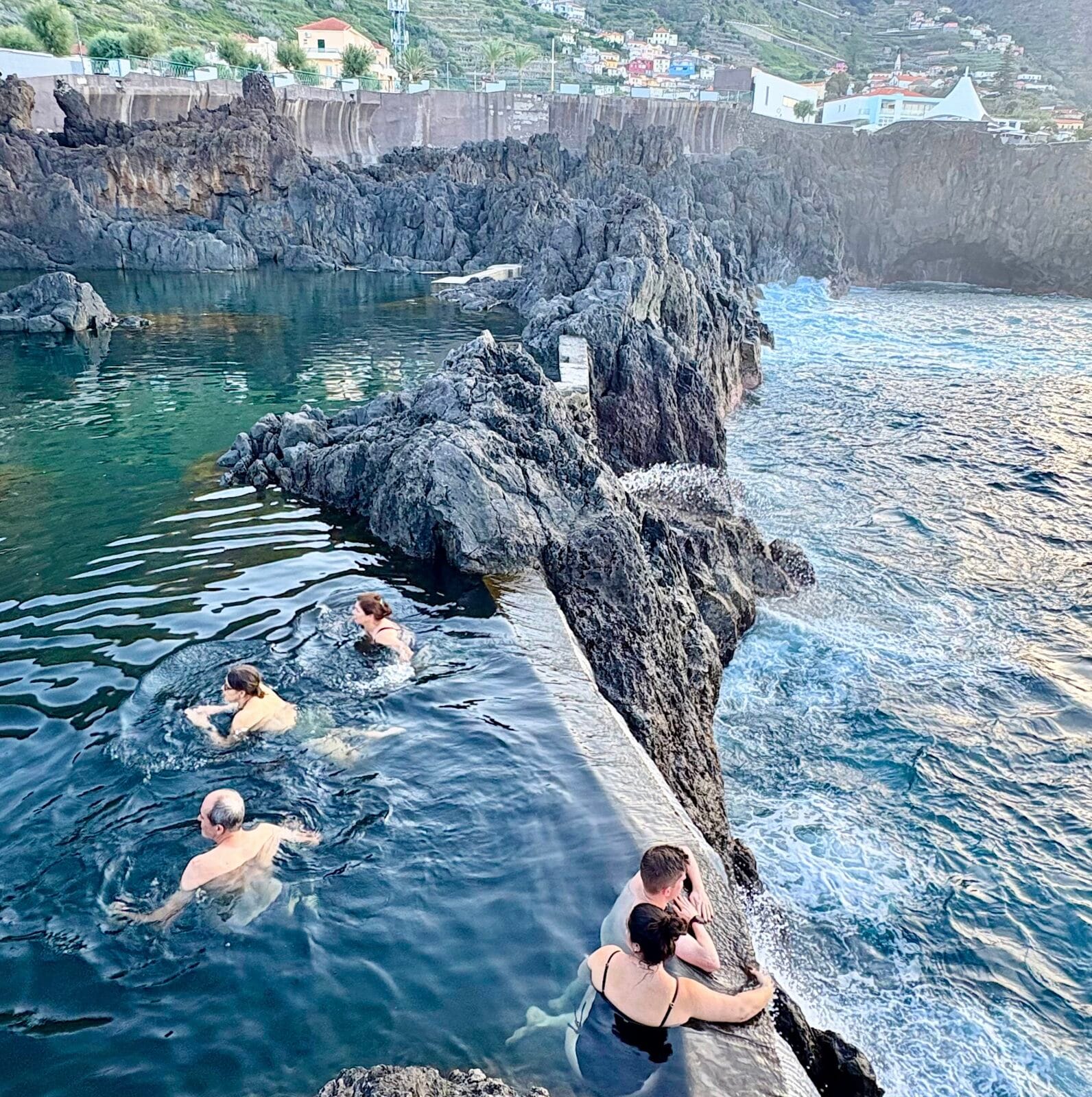
The natural Pools of Porto Moniz are formed by volcanic rocks. They are the main attraction in the region thanks to the excellent water quality and immaculate setting. (Michelle Hopkins photo for VacayNetwork.com)
The eight-day hiking trip included stays at three hotels, all with swimming pools. For many reasons, my favorite mountainside village was laid-back Porto Moniz. My home for two nights was the Aqua Natura Madeira Hotel, located across the street from the town’s main attraction, the natural pools. According to CNN, these natural salt pools are considered the world’s best tidal and ocean-side pools. Formed by ancient lava, the ocean water floats and crashes over the rocks and refills the pools. From above, Porto Moniz — with its imposing mountains dotted with winding roads, red-roof homes, and manicured gardens — looks like a living painting.
I began my 12-day trip with a three-night stay at the Se Boutique Hotel in Madeira’s capital, Funchal. Right next door to the 16th-century mendicant Gothic-style Cathedral of Our Lady of Assumption, the quirky, colorful 54-room hotel was within a short distance of some of the city’s main attractions, such as the cable car, the marina, and the Fortress of Santiago. Every night, I found my way to the hotel’s rooftop terrace, with its signature cocktail bar, to take in 360-degree views over the city.
MORE IBERIA: Europe’s Most Romantic City
Upon my arrival, I took no time to set off and explore Funchal’s sights. By chance, I stumbled across the Fortress of Santiago (Fortaleza de São Tiago). Built as a vital defense against pirate attacks, construction began in 1600 and was completed in 1614. Today, part of it houses a waterfront restaurant and a contemporary art museum.
As I was left the fortress, I turned the corner and saw dozens of people swimming at Sao Tiago Beach — an out-of-the-way stretch of pebble that attracts locals and expats, plus tourist boats. I rolled up my pants and dipped my feet in just as a large wave hit the rocks. As I staggered out of the water, my pants soaked, laughter followed me. From the amused looks, I’m sure they were thinking, “Oh, those tourists!”
The next morning, I took part in a five-hour gourmet food, wine and cultural tour with Madeira Food on Foot Tours. My guide brought the Old Town’s streets to life, sharing anecdotes and historical facts I would have never discovered on my own; all the while delighting in some of the city’s authentic dishes.
The guide pointed out hidden details of ancient buildings, explained the significance of the fortifications, and even revealed the secrets behind the famous 2010 Funchal Painted Doors Project — a strategy aimed at reviving a neglected, narrow street called Rua de Santa Maria with works of art. Today, the street’s artwork adorns nearly every door, wall or window.
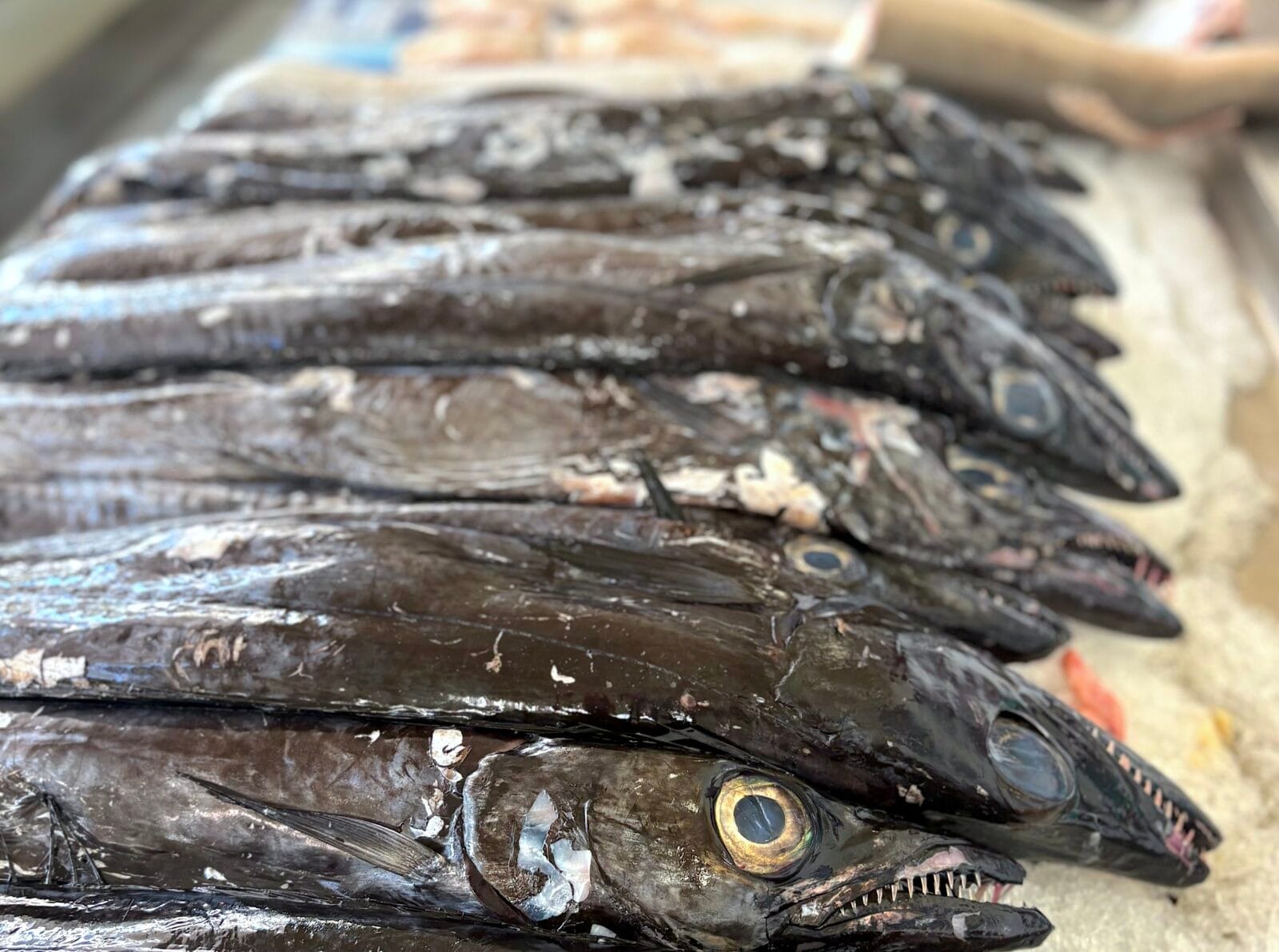
Scabbardfish is a deep-water species that resembles black eel. It’s a staple of the cuisine in Madeira and can be found at Funchal’s Mercado dos Lavradores (farmer’s market). (Michelle Hopkins photo for VacayNetwork.com)
At the Mercado dos Lavradores, built in 1940,a large selection of fruits, vegetables, spices, Portuguese leather goods, flowers and more are offered. One of the market’s best-known delicacies is the tasty white flesh scabbardfish, a rather ugly long black fish that resembles an eel. The other famous product you can find is Madeira wine, a dark red fortified wine, similar to sherry or port, which pairs nicely with handmade chocolate.
Savor Portuguese Gastronomy
Scabbardfish and Madeira wine are just the start. Known for its warm climate, lush botanical gardens, and seemingly endless ocean views, Funchal is also home to a thriving culinary scene.
In Old Town, Kampo is a hip bistro-style restaurant that features a distinctive seasonal menu. Standout dishes included the tuna tartare served in crispy cones, cured fish in mango and raspberry, and the Wagyu ribeye steak. Sitting by the open kitchen allowed me to watch the chefs in action as they prepared beautifully plated dishes.
Situated in the old Fortress of Nossa Senhora da Conceição with killer views of Funchal Bay, the Design Centre Nini Andrade Silva combines a contemporary art space with a chic restaurant. Perched above the marina, the restaurant’s innovative menu focused on fresh seafood and comfort food like the creamy chayote soup served with naan and Santo cream cheese mousse.
The Restaurante Vila do Peixe , nestled in the picturesque Câmara de Lobos, in the upper section of the old town, is known for its authentic, maritime-inspired cooking and fish caught the same day. Guests are invited to choose the type of fish they desire. The expertly grilled tuna, and crispy prawns with a zesty lemon flavor stood out.
Jeep Tour Highlights in Portugal
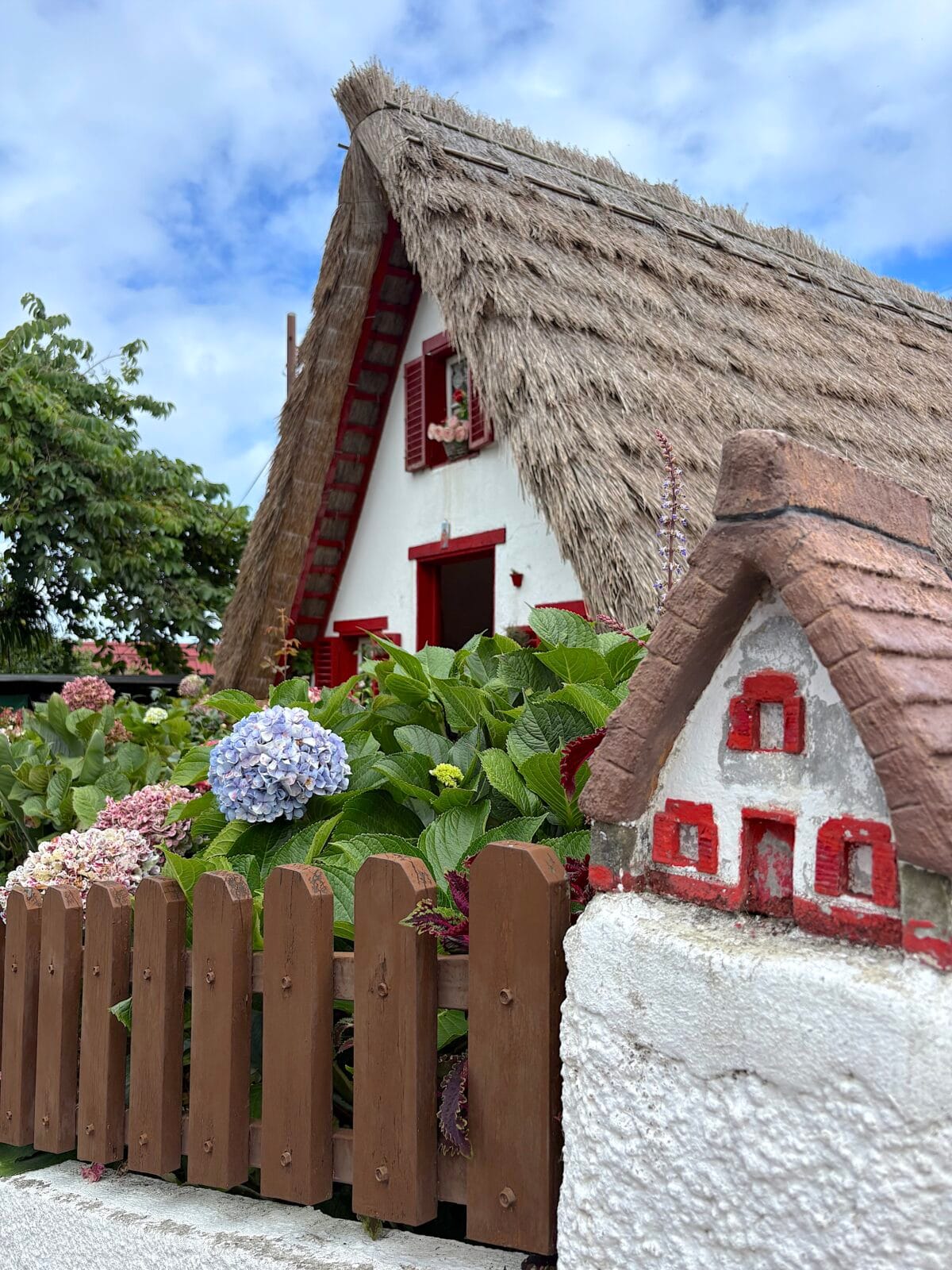
Colorful thatched-roof homes that were erected in the 1500s were built for farmers and endure on Madeira today. (Michelle Hopkins photo for VacayNetwork.com)
A jeep tour allows you to explore so much more of Madeira. At first, I thought that an eight-hour tour was far too long. In fact, it wasn’t long enough. I was driven to the east coast of the island by a guide from Green Devil Safari, who along the way pointed out the flourishing tropical fruits: avocados, sugarcane, bananas, mangoes, passion fruit, and grapes, many of which grow by the road, ready to be plucked.
It was a day filled with adventure and exploration. From visiting Engenhos Do Norte, a hugely popular 1927 rum distillery, to Santana’s iconic triangular thatched-roof homes (dubbed Casa de Colmo), dating back to the 16th century, to checking out small villages, the day flew by.
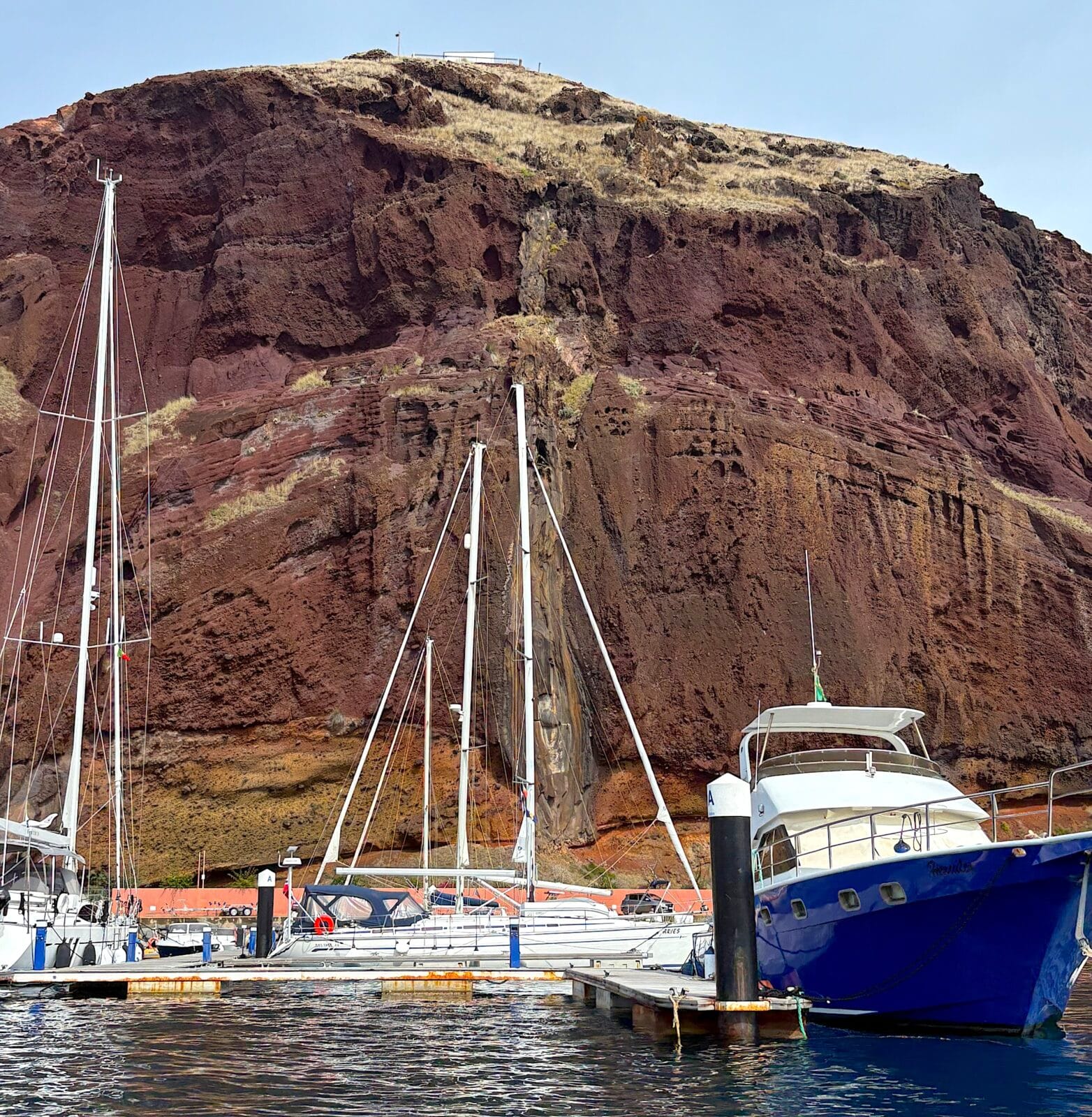
On the eastern coast of Madeira is the historic city of Machico, known for its limestone rock formation and maritime lifestyle. (Michelle Hopkins photo for VacayNetwork.com)
I had two favorite stops. First, Pico Ariero, a magnificent alpine route that cuts through tunnels and staircases. Sadly, I could only walk a short distance because the trail had been closed since August 2024 because of a fire. The second was lunch on the balcony of Quinta do Furão. Perched on the cliff of Achado do Gramacho in Santana, the former 18th-century farmhouse is set among rolling vineyards with dramatic ocean views. The restaurant is known for its authentic cuisine and extensive Portuguese wine list.
A New Era of Indulgence in Madeira
On my last night in Madeira, I stayed at the five-star Savoy Palace, a Leading Hotels of the World property with 309 rooms. If you believe luxury is in the detail, the Savoy Palace offers it in spades.
Located in the center of Funchal, the contemporary wave-like hotel rises 16 floors above sea level, and it is the island’s most impressive and sprawling accommodations property. When I arrived, I was greeted by a friendly concierge in a top hat and tailcoat who whisked me into the grand lobby. I felt like a character out of the “Beverly Hillbillies”, hoping I wasn’t gawking too much at the grandiose gold main staircase (inspired by Madeira lace) and the reception’s mammoth metal chandelier.
My suite was just as magnificent. A study in coastal elegance, with soothing earth tones punched with gold finishing, marble bathroom walls, dark woods and rich fabrics, the suite was framed by floor-to-ceiling sliding doors that opened to an endless expanse of turquoise waters dotted with all types of boats and cruise ships, and overlooking an infinity pool with inviting cabanas and water loungers.
What better way to soothe my overworked muscles than with a deep-tissue massage? In my bathrobe, I headed underground to the Laurea Spa. Inspired by the island’s Laurissilva forest, it is a breathtaking wellness oasis with Turkish baths, pools, saunas, and experience showers.
Then, it was time to glam it up for dinner.
Located on the top floor of the Savoy Palace, Galáxia Skyfood is nothing short of a masterpiece in upscale dining. From the elegant décor to the passionate sommelier who paired every course with the right selection, to the internationally inspired menu, Galáxia Skyfood was my favorite dining experience of my entire trip. Every dish of the five-course tasting menu was innovative and full of flavor.

The starry ceiling at Galáxia Skyfood is fitting. Diners may depart the Savoy Palace’s fine-dining restaurant thinking the food is out of this world. (Michelle Hopkins photo for VacayNetwork.com)
Put your trust in chef Roberto Barros and you will be in for a night to remember. Under the showstopping star-flecked ceiling, I asked the busy chef about his culinary vision.
“As a Madeiran, born in a small village called Curral das Freiras, I carry with me the memories, aromas, and flavors that have always defined my relationship with food,” Barros says. “My inspiration comes from our roots, from the recipes passed down by our parents, from the authenticity of local ingredients, and from the traditional preservation methods we have inherited.”
Barros adds his country’s emphasis on fresh ingredients, including seafood harvested from rivers and its vast Atlantic coastline, forms the cornerstone of many signature dishes.
“Daily contact with producers, sharing experiences with other chefs, and being close to Madeira’s fields and sea all help nurture my creativity,” he says. “It is in this constant exchange between tradition and innovation that I find my true synergy: Reinterpreting Madeira’s culinary heritage through contemporary techniques while preserving the soul of its flavors.”
Each morsel — from the artisan breads, the Algarve prawns, the enchidos (cured, smoked sausages), pea purée, avocado and ponzu sauce, and tuna — was perfection. Afterwards, I headed outside for fresh air, and to my delight a five-piece band was performing hits such as Stevie Wonder’s “Superstition” in the lit gardens adjacent to the hotel. What a joyful way to end a memorable trip.